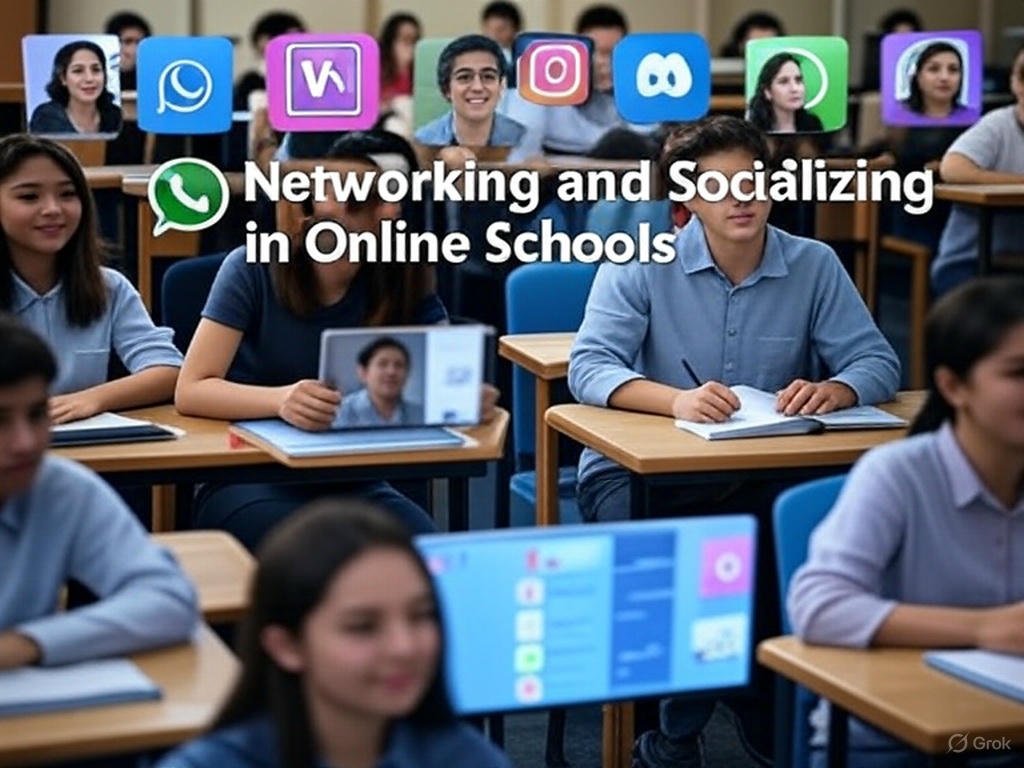
The concept of online education has become very common these days, and students are completing their syllabus while sitting at home, but one thing that people often miss is social interaction. When you are in a traditional school, you naturally meet your classmates, spend time with them, form friendships, or take part in group activities. But in online high school, these things are not so obvious. Still, it is important for students to stay socially connected because socialization is very important for a person’s mental and emotional development. When students interact with others, their communication skills improve, confidence increases, and a sense of teamwork develops.
Online education carries the risk of isolation, but if planned properly, virtual learning can be engaging and socially active. This blog explores how online high school students can interact with their friends, meet new people, and build strong connections in the virtual world. This requires not only the use of technology, but also the positive attitude and willingness of the students. When students understand that friendship and cooperation are possible in the online world, they can make the most of their virtual school and can improve their personality by expanding their social circle.
Virtual Classrooms as Social Hubs:
In online high schools, virtual classrooms are not just for studying, but they are a platform where students interact with each other as well as learn together. When live sessions are held, students get a chance to discuss with their classmates, ask questions, and share their ideas. These things help them to become social. Features like breakout rooms also play an important role in this process, where students divide into small groups and work on specific topics, and communication develops naturally among them. Group projects are also a great way where students to work together to complete assignments and help each other. This process not only improves their friendship but also helps them learn teamwork and leadership skills.
Teachers also organize different interactive activities to make the environment engaging, like quiz competitions, online debates, or virtual presentations, which help students understand each other better. If a student is a little proactive and participates in the discussion, they can develop a good bond with their friends. In this way, virtual classrooms become such a hub where, along with learning, social skills also grow, and the student does not feel alone.
Online Clubs and Student Organizations:
Another great way to socialize in online high schools is through online clubs and student organizations. These clubs are created for students who are interested in a specific interest, such as book reading, gaming, coding, art, music, or environmental awareness. When students become part of such clubs, they meet people who think like them. This way, not only does their interest grow, but they also feel a closer connection with each other. In these clubs, there are regular online meetings, events are planned, and sometimes competitions are also held, which involve the students even more.
These clubs also develop leadership skills because students get roles such as president, secretary, or event organizer, which gives them a sense of responsibility. Group work and working on a common goal develop a sense of unity and cooperation among students. Even in the online environment, when you become an active member of a club, you become a part of your school’s culture and meet new friends. All these things are very beneficial for social growth and save students from isolation. In today’s digital era, these clubs are a golden opportunity for every online student who can use them to build their personality in small steps.
Utilizing Social Media and Messaging Platforms:
For online high school students, social media and messaging apps play an important role in their networking and social interaction. When students connect with their school peers on WhatsApp, Discord, Telegram, or a private forum, their communication becomes much easier. These platforms are informal, where students can freely share their ideas, jokes, assignments, and general matters. Participating in group chats or study circles helps them to understand their classmates better and develop strong friendships. But it is also very important to take care of digital etiquette and online safety. Sometimes students cross the line or overshare, which can be dangerous for privacy.
Therefore, it is important that students adopt responsible behavior and interact while keeping in mind someone’s feelings and personal space. The presence of teachers or moderators is also helpful so that the environment remains safe and respectful. When students stay in touch with their friends digitally, they do not feel alone, and their confidence also increases. In this way, social media and messaging apps are not just a tool to pass time but become a productive platform where social development also takes place, along with learning. If today’s student takes proper advantage of these tools, they can create a strong network even in the virtual world.
Teacher and Mentor Support in Virtual Social Growth:
The role of teachers and mentors in online high school is not limited to academics, but they also act as a strong pillar in the social growth of students. When students are studying virtually, they often feel emotionally or socially disconnected, but if teachers are active and supportive, this feeling can be reduced to a great extent. Teachers often arrange group discussions where every student gets a chance to speak. These small things help students connect. Mentors or school counselors also give individual attention to students, where they talk to them about their problems, interests, and goals. These one-on-one check-ins are very valuable for students as they can express their thoughts freely.
If teachers make their classroom environment friendly and inclusive, every student feels secure. For social development, some teachers also organize ice-breaking activities or fun quizzes that make the class interactive. When students feel that their teacher also gives importance to their social life, they engage more and participate in every activity with confidence. Ultimately, a supportive teacher or mentor can guide the online student in how he or she can be an active and connected student digitally.
Conclusion:
In today’s digital era, online high school is not just a means of study but has become a platform where students can also develop their social skills. Socialization is very important for the emotional and mental growth of every student, and this is possible even in the online environment if the right tools and methods are used. Virtual classrooms, online clubs, social media platforms, and teacher support all of these together create a framework where students feel connected and can perform at their best. Not every student needs to be an extrovert or talk all the time, but everyone should get a chance to form their circle and interact with friends.
Social networking is not just for fun; it is also important for the future as it enhances communication, cooperation, and leadership skills. Students who participate in their school’s digital activities not only perform well academically, but their confidence and self-belief also improve. Therefore, it is important that online high school students try to step out of their comfort zone, meet new people, and grab every opportunity. When they connect in new ways, they become not just a student but a socially strong and responsible individual.
FAQs:
- Can students truly build friendships and social connections in online high schools?
Yes, students can absolutely build meaningful friendships in online high schools. Although the interaction is virtual, tools like live classes, group projects, online clubs, and social media platforms provide many opportunities for students to engage, collaborate, and connect with peers in a meaningful way. - What are some ways virtual classrooms help students socialize?
Virtual classrooms support socialization through live discussions, breakout rooms, and collaborative group projects. These activities encourage students to communicate, share ideas, and work together, which helps develop teamwork, confidence, and friendships—just like in traditional classrooms. - How do online clubs and student organizations benefit social growth?
Online clubs bring together students who share similar interests, like art, music, or gaming. These groups host meetings, events, and competitions, helping students bond, develop leadership skills, and feel a sense of community. It’s a great way to avoid isolation and stay socially active in a virtual setting. - Are social media and messaging apps safe for student networking?
Social media and messaging platforms like WhatsApp, Discord, and Telegram can be excellent tools for student networking when used responsibly. Students should follow digital etiquette, respect others’ privacy, and avoid oversharing. Supervision from teachers or moderators ensures these platforms stay respectful and safe. - What role do teachers and mentors play in virtual social development?
Teachers and mentors are key to students’ social growth in online settings. They create inclusive environments, organize interactive activities, and offer personal support through one-on-one check-ins. Their involvement helps students feel seen, heard, and connected, making the virtual classroom more engaging and human.